What is a Facebook Special Ad Category?
A Facebook Special Ad Category identifies advertising that needs additional safeguards, including certain housing, employment, financial and political campaigns. It is separate from your campaign objective: a Leads campaign can also need a special category. The framework applies across relevant Meta advertising, including Instagram.
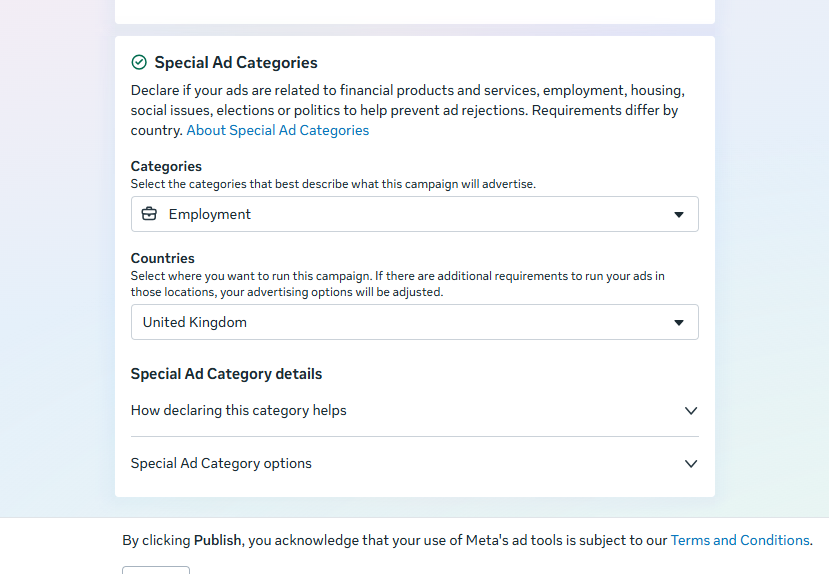
For businesses, this is a planning consideration from the outset. If your proposed strategy depends on targeting a particular age group, a small postcode area or people similar to existing customers, you need to establish whether those options are available before committing to the approach.
Meta introduced restrictions to help prevent discrimination in access to opportunities such as housing, employment and credit. Understanding that purpose helps explain why simply looking for a way around a missing targeting option is the wrong starting point.
Which ads need a special category?
The main areas to assess are housing, employment, financial products and services, and social issues, elections or politics.
| Campaign you are planning | What to investigate before building it |
|---|---|
| Promoting a property sale or letting | Whether the offer falls within housing requirements in the target market. |
| Recruiting employees | The employment category, even when recruitment is not your usual advertising activity. |
| Promoting loans or a finance offer | The credit-related requirements and the wider financial category where applicable. |
| Campaigning on a political or social issue | Whether advertising is permitted and what authorisation or transparency requirements apply. |
These are starting points for assessment, not an exhaustive classification list. Review the actual offer, wording and destination together. The company’s sector alone does not tell you everything about the campaign.
For example, a retailer advertising a product and the same retailer promoting a finance offer should not assume that both campaigns need identical treatment. Equally, an employer recruiting staff is presenting a different proposition from its usual customer advertising.
Country matters. Meta’s broader financial-products requirement covers advertisers based in or targeting the US. Credit rules also extend to Canada and specified European markets. Do not automatically apply US guidance to every UK financial-services campaign.
Political advertising needs a separate assessment: Meta stopped delivering political, electoral and social-issue ads in the EU on 6 October 2025. That EU change should not be described as a UK-wide ban.
Facebook Special Ad Category restrictions: what changes?
For affected housing, employment and financial campaigns, the available audience tools can be substantially narrower than in a standard campaign. Meta describes restrictions on age, gender and postcode targeting in covered markets.
| Setting | Restriction to plan for |
|---|---|
| Age and gender | Generally broad age coverage and all genders; European credit ads have a limited age-range exception. |
| Location | Postcode targeting and location exclusions are restricted; minimum radii vary by market. |
| Detailed targeting | Fewer permitted interests and restrictions on demographic, behavioural and exclusion options. |
| Lookalikes | Unavailable for the affected categories. |
| Custom audiences | Eligibility and permitted use need checking; they are not interchangeable with lookalikes. |
Source: Meta’s Special Ad Categories documentation. Check the live settings for your category and country before launch.
Our advice is to distinguish an audience preference from a genuine operational requirement. A business may prefer customers of a certain demographic, but it may genuinely be unable to serve customers outside a particular region. Both need careful planning, but they are different problems.
How should restrictions change your campaign strategy?
1. Decide what needs its own campaign
Review category requirements before grouping offers together. A recruitment campaign and a customer-acquisition campaign will usually have different objectives, messages and success measures, regardless of whether they share a brand.
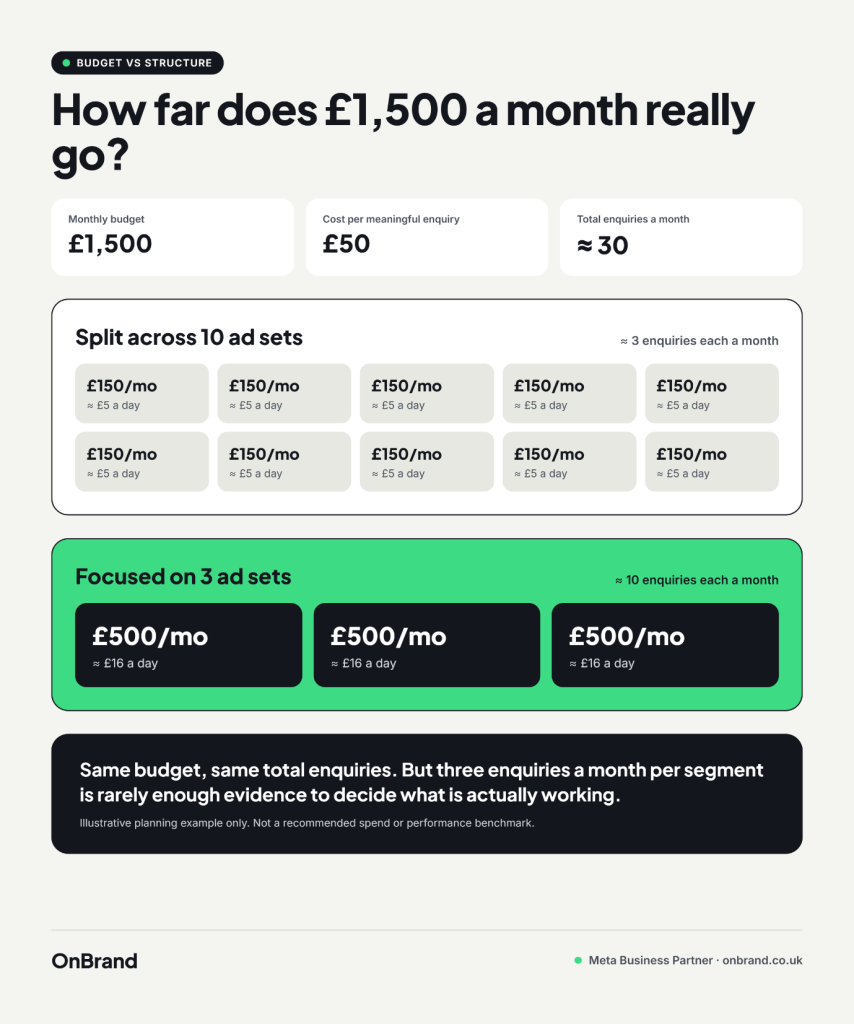
Avoid creating numerous small ad sets simply to recreate demographic divisions that the category does not permit. Separate campaigns or ad sets where there is a clear commercial or measurement reason.
2. Make the offer and location clear
When audience selection is broader, clear communication becomes especially valuable. Explain what is being offered, where it is available and what someone should expect after responding.
For a local service, the creative and landing page should help people understand the service area. For recruitment, the role, working arrangements and relevant requirements should be easy to find. This improves understanding; it does not replace targeting compliance or justify discriminatory wording.
3. Judge lead quality through the whole journey
A low cost per enquiry is useful only when those enquiries contribute to the business. Agree what a suitable lead looks like and review how many progress to appointments, opportunities or customers.
Where supported and appropriately implemented, Meta’s CRM integrations can help advertisers optimise towards qualified leads rather than volume alone. The practical value still depends on consistent qualification, reliable data and effective follow-up.
4. Test the decisions you can influence
Useful tests may include the offer, creative concept, explanation of the service, landing-page journey or lead form. Define the question first and assess the result against a business outcome.
A special category does not remove the need for strategy. It changes the range of tools available to deliver it.
Before you launch: a practical checklist
Account verification and authorisation requirements
Before launching a Facebook Special Ad Category campaign, advertisers should check that the necessary account permissions and verification requirements are in place.
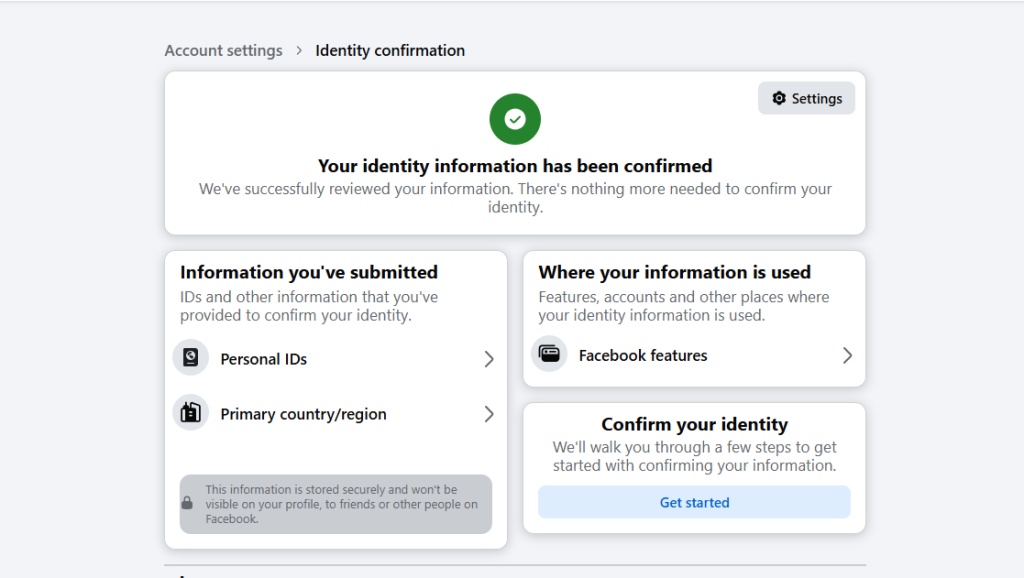
- Identity verification: The Facebook profile managing the campaign may need to complete Meta’s identity verification process, depending on the advertising category and country.
- Facebook Page access: The verified profile must have the appropriate permissions to manage advertising through the relevant Facebook Page and ad account.
- Business verification: Meta may require the Business Portfolio to be verified before certain regulated advertising activities can proceed.
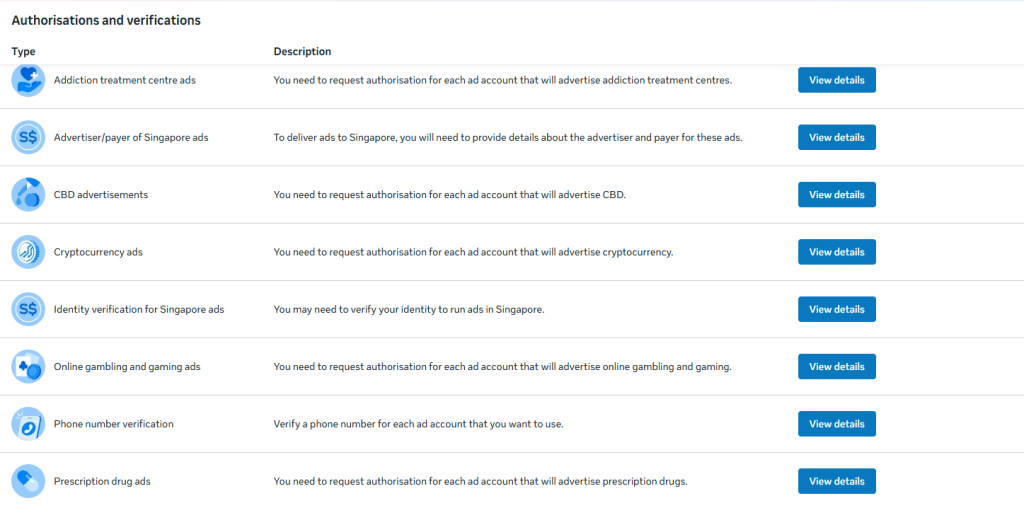
- Advertiser authorisation: Additional authorisation and disclaimers may be required for ads relating to social issues, elections or politics.
- Regulatory verification: Certain financial services campaigns may require additional regulatory documentation or advertiser verification.
- Have we assessed the actual offer, ad copy and landing page?
- Have we checked the category and countries involved?
- Does our planned structure rely on targeting options that are unavailable?
- Is the service area, role or offer clear to the reader?
- Are the audience sources and exclusions permitted for this campaign?
- Have we defined lead quality and the follow-up process?
- Have we allowed time to resolve review issues before a fixed launch date?
An incorrect category can lead to ads being paused or rejected. Review the reason given, correct the relevant setup and seek a review if you believe the decision is mistaken. Removing truthful information to disguise the offer is not a sound solution.
Facebook Special Ad Category FAQs
Yes. It is a Meta advertising framework, rather than a Facebook-only placement setting. Running an affected campaign on Instagram does not remove the need to assess its category.
No. Your objective describes the result you want, such as leads or sales. The category identifies additional requirements associated with the advertising. Consider both when planning the campaign.
Meta does not allow lookalikes for the affected housing, employment and financial categories. Custom audiences have separate eligibility requirements.
Assess the specific offer rather than relying on the business label. A housing opportunity, an unrelated product and a recruitment advert are different propositions. Where classification is unclear, check current Meta guidance before building the audience.
There is no universal cost increase to assume. Audience restrictions change your available approach, but results also depend on the offer, competition, creative, conversion journey and lead quality. Compare cost per qualified outcome, rather than clicks alone.
An agency should plan within the applicable requirements. Its value lies in interpreting the rules, building a suitable campaign, improving creative and measurement, and helping resolve review issues—not promising exemptions.
Policy review date: 24 November 2026. Country requirements and platform features can change; recheck the relevant setup before launch.
The team behind your Meta advertising
Prajith Sreekantan works on campaign setup, optimisation and Meta support. Sarah Warren connects campaign strategy with client priorities and commercial performance.
Together with OnBrand’s creative and content specialists, the team brings campaign planning, messaging and measurement into one approach.

Sarah Warren
Digital Account Director
Leads your account, strategy and reporting
Read more about Sarah Warren
Prajith Sreekantan
PPC Manager
Runs your campaigns and our Meta partner support
Read more about Prajith Sreekantan
Ciara O’Brien
Destination Marketing Manager
Campaign planning and delivery
Read more about Ciara O’Brien
Charlotte Ball
Marketing & Content Executive
Ad copy and social content
Read more about Charlotte Ball
Holly Davidge
Digital Content Creator
Reels and video-first ad content
Read more about Holly Davidge
Tussunee Roadjanarungtong
Digital Graphic Designer
Static, carousel and campaign creative
Read more about Tussunee RoadjanarungtongRelated reading
 Blog · Digital
Meta ads campaign structure: best practice starts with your business
Discover how to structure Meta ads campaigns around your objectives, budget and audience, with expert guidance on lead quality, testing and measurement. Read the article
 Blog · Digital
What It Means to be a Meta Business Partner Agency
OnBrand digital marketing agency has Meta Business Partner status. Companies choose us to manage and run their Meta ads. Learn more. Read the article
 Blog · Digital
Meta Conversions API vs Meta Pixel
When it comes to Meta advertising using the Meta Pixel and the Meta Conversions API (CAPI) is crucial for accurate reporting. Learn more. Read the article
Plan your campaign around the rules and your business goals
Unsure whether your advertising needs a special category, or whether the current setup supports the outcomes you want?
Explore OnBrand’s Meta ads management services for support with campaign planning, creative, tracking and ongoing optimisation.